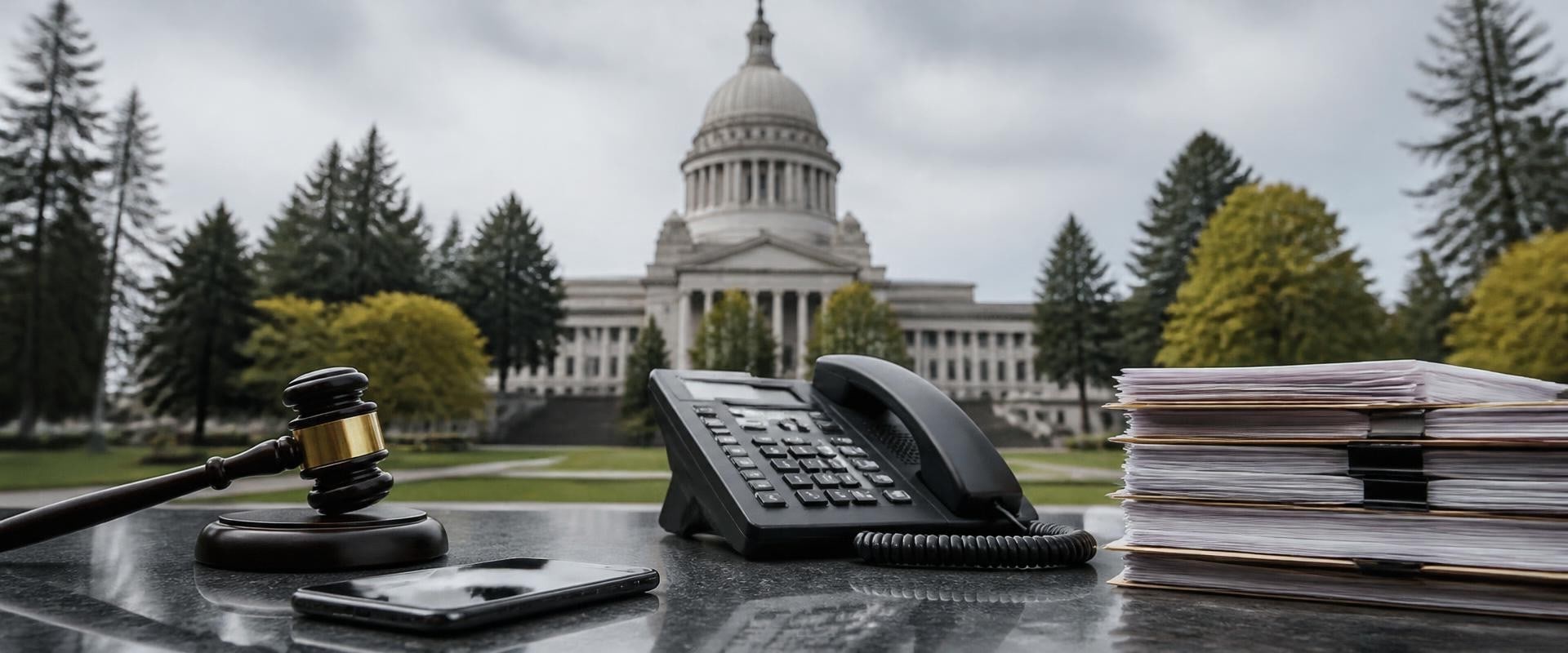
Businesses contacting Washington consumers must account for state restrictions on automated sales calls and telephone solicitation practices. These requirements affect marketing campaigns, prerecorded messages, calling schedules, consumer removal requests, and relationships with outside calling providers.
Why Washington Businesses Need Clear Calling Policies
Telephone marketing can support customer outreach, but businesses face legal risks when campaigns disregard consumer protection requirements.
Washington regulates several aspects of telephone solicitation.
RCW 80.36.400 prohibits using defined automatic dialing and announcing devices for commercial solicitation.
RCW 80.36.390 establishes rules for broader telephone solicitation activities.
Businesses should understand that these provisions address different forms of conduct.
A live-agent campaign may avoid the specific automatic dialing and announcing device prohibition while still violating calling-hour or removal requirements.
Automated sales calls require special attention
Washington's automatic dialing statute focuses on equipment that automatically dials telephone numbers and transmits recorded or artificial voice messages.
The law prohibits using these systems for unsolicited commercial solicitation directed at telephone customers within the state.
Recorded messages delivered directly to voicemail also fall within the statutory definition.
Organizations should examine how their technology operates rather than rely on general descriptions supplied by vendors.
A system's technical capabilities, the message content, and the purpose of the call can all affect compliance.
Challenges and Opportunities in Washington Telemarketing
Washington's requirements encourage businesses to use more careful outreach practices.
Organizations can reduce legal exposure by maintaining accurate calling records and honoring consumer preferences.
They should also distinguish legitimate customer communications from unsolicited sales campaigns.
A company contacting an existing customer about a requested service may face different rules from one advertising unrelated products to unfamiliar recipients.
Calling schedules and identification requirements
Covered telephone solicitors generally must limit calls to the period between 8 a.m. and 8 p.m. in the recipient's local time zone.
They must identify the caller, the organization represented, and the purpose of the solicitation within the first 30 seconds.
When a recipient asks to end the conversation, the solicitor must disconnect within 10 seconds.
These requirements should be reflected in staff training, calling procedures, and campaign oversight.
Businesses should also maintain processes for honoring valid removal requests for at least one year.
Working With Outside Calling Providers
Some businesses use external companies to conduct telephone campaigns.
Outsourcing does not automatically eliminate responsibility for unlawful solicitation.
Washington's automated calling statute also prohibits certain knowing assistance in transmitting prohibited commercial calls.
The specific liability of each participant depends on the statute, the facts, and any applicable exclusions or defenses.
Understanding possible financial exposure
RCW 80.36.400 provides potential damages of actual loss or $1,000 per violation, whichever is greater, for injured persons.
Repeated violations of RCW 80.36.390 can also lead to private lawsuits and statutory damages.
The latter provision allows reasonable attorney fees and costs for prevailing plaintiffs.
These remedies make compliance important even when individual calls appear inexpensive to place.
Common Questions Around Washington Robocall Compliance
Can businesses use prerecorded sales messages?
Washington prohibits unsolicited commercial solicitation using automatic dialing and announcing devices as defined by RCW 80.36.400.
Are live telemarketing calls allowed?
Covered live solicitation may be permitted when businesses follow the applicable requirements and restrictions.
Must businesses maintain removal records?
Maintaining reliable records helps demonstrate compliance with Washington's requirements to honor qualifying removal requests.
Can an outside calling vendor create legal problems?
Yes. The conduct of a vendor and the involvement of the business may raise questions under applicable state and federal laws.