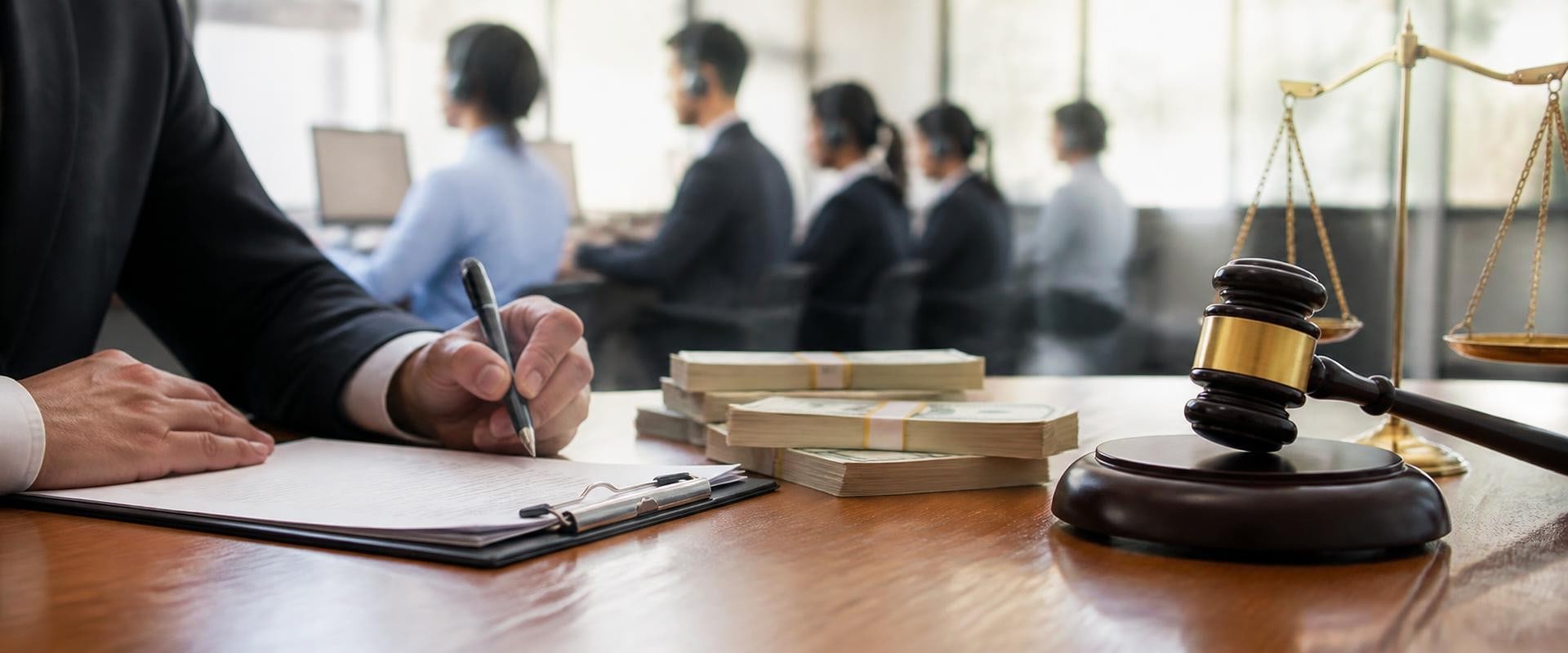
Unwanted sales calls are not always placed directly by the company selling the advertised product.
A business may hire marketing agencies, call centers, or lead-generation contractors to contact potential customers.
These arrangements can make it difficult for consumers to identify the party legally responsible for a TCPA violation.
Depending on the applicable law and business relationship, liability may involve the caller, the seller, or more than one organization.
Why multiple businesses may be involved
A seller may contract with an outside marketing agency to generate customer inquiries.
The agency may use a separate call center or telecommunications provider.
The consumer receives the call without necessarily knowing how these organizations are connected.
The difference between a seller and a caller
The caller is the person or business placing the communication.
The seller is the organization whose products or services are being promoted.
Sometimes they are the same entity.
In other situations, the seller relies on an outside contractor.
Legal responsibility depends on the applicable statutory provision and facts.
Can a seller be responsible for contractor calls?
Potentially.
Certain Do Not Call rules expressly address communications made on behalf of a business.
Other TCPA claims may involve principles concerning authorization, control, or agency relationships.
However, a seller does not automatically become liable for every unauthorized call placed by an unrelated marketer.
Evidence of the relationship matters.
Why identifying the responsible business affects compensation
A consumer may identify the displayed number but still not know which organization initiated the marketing campaign.
Caller ID spoofing and number reassignment can create further confusion.
Look beyond the displayed number
The advertised product, business name, website, and callback information may provide useful leads.
Consumers should preserve original voicemails and other communications.
Independent business records may help confirm legal entity names.
However, public information alone may not establish responsibility for a particular call.
Did you know? Internal Do Not Call duties can reach the seller
Federal regulations address situations where third parties maintain company-specific Do Not Call lists.
The entity on whose behalf calls are made may remain responsible for failures to honor applicable requests.
This prevents businesses from assuming that outsourcing eliminates every compliance obligation.
The exact legal claim still depends on the facts.
Who ultimately pays a judgment?
A successful plaintiff generally seeks payment from the legally responsible defendant.
If multiple parties are involved, liability and payment obligations depend on the judgment, settlement, and applicable law.
Collecting an award may be difficult when a defendant lacks assets or is located outside the country.
This is one reason identifying the correct legal entity is important.
Common questions around TCPA liability
Can I sue the business advertised in a robocall?
Potentially, if the business is legally responsible for the communication.
Is the call center always liable?
Not automatically. Liability depends on its conduct and the relevant legal provision.
Can more than one company be responsible?
Yes, depending on the facts and applicable legal rules.
Does outsourcing protect a seller from TCPA claims?
No. Outsourcing does not automatically eliminate potential liability.
Why does identifying the seller matter?
It may help establish responsibility and identify a defendant from whom recovery is possible.